


What makes iGaming Venezuela such a hot market in 2026? How can iGaming businesses enter the market and succeed? AffPapa breaks down the biggest trends, player behavior,...

iGaming is entering one of its most regulated and competitive periods to date, with renewed operator strategies and industry trends. Despite regulatory changes in the online gambling industry worldwide, the iGaming market continues to grow. According to Grand View Research, the industry is rising at a compound annual rate of 11.90% and is expected to reach $153 billion by 2030.
To prepare you for what’s coming, iGaming in 2026 is defined by two forces: stricter regulation and a clear refocus from aggressive acquisition to sustainable growth. This article will guide you through iGaming 2026 and break down the most important changes in the online gambling industry to help save your time and prepare you for the upcoming events.
Table of Contents
If there’s one thing that’s clear for iGaming in 2026, it’s that the industry is not moving in just one direction globally. While some markets are tightening rules, others are expanding and inviting new players in. For everyone in iGaming, understanding these regional differences is not just a “nice to have”; it’s now a survival skill.
Now, let’s discuss iGaming markets in 2026, as this will be a huge help when deciding where and how to operate.
In 2026, Europe isn’t just tightening the screws on iGaming; it’s setting an example of what a compliant and sustainable gambling industry should look like. For operators, this means one thing: Europe is no longer the easiest to enter for iGaming in 2026, but it still remains one of the most valuable markets.
Since 2025, the value of the European gambling industry has been rising with a 5.32% compound annual growth rate. According to European Gaming, in 2025, digital gambling revenue in Europe reached over €50 billion, showing the expansion and importance of the region in the global online gambling industry. European iGaming regulations will see a surge of legislative changes in 2026, so we have prepared a sort of guide for you to understand where laws are tightening and how to navigate through gambling operations in Europe.
The regulatory authorities of major European markets are no longer satisfied when operators just comply with the law; they are now demanding visible results. Three categories are where most attention is paid. Responsible gaming systems in iGaming 2026 must show exactly how operators prevent harm, not just react to it. Anti-money laundering (AML) measures follow, especially as the European Gaming and Betting Association (EGBA) introduces its updated AML guidelines in 2026. Lastly, operators have to be careful with marketing, as countries like Denmark, Ireland, and Croatia are implementing new affiliate marketing restrictions for iGaming in 2026.
Yes, yes, we know, the regulations are really harsh, but if you follow the principles below, you will not face regulatory backlash:
Where Europe closes, LATAM seems to open up. A region that was once simply a new location tag on the iGaming world map is now the world’s booming iGaming market in 2026.
The reason why this region’s popularity is at its peak is actually not too hard to explain. LATAM quickly adopts alternative iGaming payment methods, has a mobile-first population, and has a deep-rooted cultural closeness to gaming. iGaming in Mexico, Brazil, Peru, and Chile is now under the spotlight of operators looking to expand.
As of January 1, 2025, Brazil’s online gambling industry became regulated under federal law, which surely shows that in 2026, iGaming in Brazil aims to improve licensing and player protection, consequently stabilizing the country’s position in the iGaming industry. Following the launch of the regulated market, Brazil approved the introduction of prediction markets in the country as well, with Kalshi announcing its entry on March 9, 2026, in collaboration with one of Brazil’s biggest independent financial institutions, XP International. B3, one of the largest exchanges in the world, didn’t wait too long either and received approval from the Brazilian Securities and Exchange Commission to launch its prediction market for professional investors in March 2026. The boost in gambling activity in Brazil can be further proved by Blask Index data, which shows the combined level of engagement and interest across gambling brands in a country, and has recorded the highest period value for Brazil at 59.74 million on February 21, 2026.
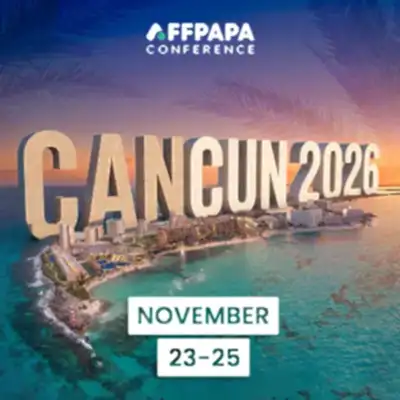
Clear proof of LATAM’s growth was Mexico welcoming the first affiliate-led conference in Cancun, organized by AffPapa between November 24 and 26, 2025, where over 400 attendees took part, including affiliates, operators, and iGaming B2B providers. The two-day event hosted panel discussions, affiliate marketing talks, and created networking opportunities. Soon, the AffPapa Conference Cancun will be back for a second time to conduct the event between November 23 and 25, 2026.
To use the growing market to their advantage for iGaming in 2026, it’s important for operators to create authentic experiences for players, and now, the Latin American region sees how localized content and culturally relevant marketing help create a framework that is native, not imported.
If you thought LATAM was the only eye-catching region for iGaming in 2026, then we’re here to note that Africa is no less interesting in the modern gambling industry.
The African iGaming industry has one powerful driving force: the rise of mobile technology in the region. This perspective can be strengthened with real data, as Kenya’s Communications Authority has published that mobile data subscriptions hit 60.2 million by the end of September 2025, which exceeded the country’s population of 57 million. With a total population of over 1 billion, operators couldn’t leave the market unnoticed. Nigeria, Kenya, and South Africa are among the more popular iGaming markets in 2026, as studies reveal that 82.1% of Kenya’s population and 73% of South Africa’s population have engaged in gambling. Ghana, Uganda, and Zambia follow the main players in Africa, as these countries have also recorded double-digit mobile GGR growth.
The issue in the region is that operators entering the market have to be wary of inconsistent taxation systems, unreliable payment infrastructure, and high demand for low-data game formats. So, from an operator’s perspective, Africa in iGaming 2026 represents a high-growth but also high-friction market, where success literally depends on adapting to infrastructure limitations instead of ignoring them.
And last but not least, let’s talk about Asia’s plan for iGaming in 2026. Japan, India, and the Philippines are the leading names in Asia’s iGaming market in 2026. According to Newzoo, in 2025, the Asia-Pacific region was the dominating region in revenue collection, reaching $87.6 billion, which was around 46% of global spending.
Japan will soon see the country’s first casino operator opening its doors and offering its services, as MGM Osaka’s construction works began in 2025. This is MGM’s biggest expansion in Asia and has a cost of $12 billion.
In India, the new laws on iGaming in 2026 are less appealing for operators. The country passed a law that prohibited gambling platforms from offering money-based services, no matter whether they are skill-based or chance-based. The Promotion and Regulation of Online Gaming Act (PROGA) was amended in Parliament in August 2025.
Various constitutional issues arose as a result of the ban, and the Supreme Court of India has deferred the main hearing on the challenges to late January 2026. Until the hearing and the final verdict, the law will remain intact, and operators violating the regulations may face fines of up to $113,000 or 3-year jail sentences.
Lastly, Turkey finalized legislation for a total ban on iGaming ads in December 2025, categorizing betting ads equally as drugs and terrorism. For iGaming 2026, the country will be implementing a zero-tolerance approach, meaning you have to say goodbye to ads on TV, radio, billboards, or digital platforms. In one word, iGaming affiliate marketing will be dead in Turkey. Even implying promotion will result in jail sentences between 1 and 3 years under Law No. 7258.
iGaming in 2026 is all about surviving smarter in a market where regulation, costs, and competition are rising at the same time, and the refocus from acquisition-led growth to profitability-led growth is probably the most underestimated change in iGaming 2026. You certainly don’t want to risk building yesterday’s model in tomorrow’s market, so keep reading to find out how the online gambling industry is changing.
If you guessed prediction markets, then you’re right! One of the biggest structural changes in iGaming in 2026 is the rise of prediction markets. Sitting somewhere between financial products, sports betting, and simple entertainment, prediction markets are opening new engagement channels and even bigger regulatory grey zones. Unlike traditional sports betting or casino models, prediction markets operate in a hybrid regulatory space, making them one of the most unpredictable but high-potential areas of iGaming in 2026. We can see how some jurisdictions are treating them as derivatives, others as gambling, and some haven’t even decided at all. This means that opportunity will come on shaky ground for operators because their innovations seem to be faster than regulations, so navigating the gap will require strict legal supervision.
Grey zones themselves are becoming a kind of defining feature of iGaming 2026. Even when operators work in spaces where rules and laws exist, their interpretation still varies on almost every issue. To name just a few: influencer-led acquisition, affiliate accountability, alternative payments, and cross-border operations. All of these should be treated as risk-managed experiments, not shortcuts.
Something operators can’t ignore in iGaming 2026 is the constantly rising cost of compliance. From stricter KYC processes to real-time transaction monitoring and AML reporting, regulatory requirements are becoming more and more complex and resource-intensive, too. What used to be a background function is now a main operational priority, forcing operators to invest in strong compliance infrastructure instead of treating it as a one-time setup.
We wanted to leave the concerning changes for last, so here we go. iGaming 2026 is seeing a move towards fewer brands and bigger ecosystems. Bigger groups are better positioned to deal with compliance costs, adapt to regulatory changes, and invest in modern technologies that smaller operators struggle to keep up with. For many mid-tier operators, the strategic question to ask in the iGaming market in 2026 isn’t “How do we expand?”; it’s “Do we partner, specialize, or exit?”
You might ask now, “What should I do with all of this in 2026?” Let’s look at it from three different perspectives.
For operators, this will mean having to rethink expansion with regulation at the center. Market selection for iGaming 2026 will not be just about size. Regions like LATAM and Africa reward localization and compliant entry, while more mature markets like Europe are far more disciplined and require more structured operations.
Our advice: conduct a full compliance audit for each market before launch or expansion. Identify gaps and adapt your operations before regulators act against them.
Affiliates and marketing partners will face an equally decisive year for iGaming in 2026. To maintain reputation and be a valuable partner, it’s important to invest in transparency and regulator-friendly acquisition methods.
Our advice: use geo-targeted campaigns to automatically exclude restricted markets and self-excluded players.
2026 presents an opportunity rather than a threat for iGaming B2B providers. The market will see a rise in demand for scalable and market-specific solutions, so the iGaming B2B providers that implement platform consolidation through mixed casino, poker apps, and sportsbook offerings will be the ones to come on top.
Our advice: develop compliance tools like AML reporting or self-exclusion integration that operators can implement in their platforms to keep up with regulatory standards.
If you have come this far, we suggest you stay and read the last piece of information that we have collected for you, as now, we’ll present the hottest online gambling trends in 2026. Let’s expand on the following
One of the most visible online gambling trends in 2026 is the implementation of artificial intelligence in iGaming. AI in iGaming moved beyond just chatbots or recommendations; it’s now an important tool for personalization, risk management, and responsible gaming. AI is gaining popularity as it helps iGaming operators understand why specific behaviors are flagged and how to better connect with players.
AI is only one part of the wider shift that is happening in iGaming in 2026. Speed and convenience are now also redefining the iGaming industry. Demand for fast access and payouts is pushing operators to adopt mobile-first designs; moreover, platforms are expected to deliver near-instant transactions and intuitive mobile experiences, that is, if they want to keep the strong iGaming player retention.
Last but not least, a redirect from casino bonuses to brand value is noticeable in iGaming in 2026. Operators are increasingly focusing on trust and long-term player engagement instead of aggressive bonus tactics. So if you want to stay ahead of iGaming 2026 trends, make sure to replace flashy offers and promotions with brand and customer lifetime value metrics.
And lastly, something that all our readers should take with them is to remember that growth in iGaming in 2026 is still possible, but it is no longer accidental. To stay ahead of what’s happening in the iGaming industry, join AffPapa now and be the first to receive all the latest news.
What will be the biggest regulatory changes in iGaming in 2026?
The biggest regulatory changes for iGaming in 2026 will be the EGBA introducing a new standard on markers of harm and publishing its updated AML standards. Then, advertising bans will be introduced in Turkey and different European countries, while African and Latin American markets improve localized marketing and expand the gambling industry.
Which regions will offer the most opportunities for iGaming in 2026?
The regions offering the most opportunities for iGaming in 2026 will be LATAM and Africa, which stand out as high-growth markets due to an expanding regulatory framework and a quick rise in mobile technology. The regions also have a rooted cultural closeness to gaming.
What should operators, affiliates, and iGaming B2B providers prioritize to stay competitive in iGaming in 2026?
To stay competitive in iGaming in 2026, operators, affiliates, and iGaming B2B providers should focus on compliance, localization of market strategies, and integration of responsible gambling tools and messages. These will be the most important criteria for long-term success for all sides.







 ReferOn shortlisted for “Best Affiliate Software” at SiGMA Awards
 ELA Games discusses game innovation at HIPTHER Prague
 MyStake CEO Andres Markou exposed as AI generated identity ReferOn shortlisted for “Best Affiliate Software” at SiGMA Awards ELA Games discusses game innovation at HIPTHER Prague